
Even as the weather turned to fall, that time of year when I feel most present and alive, I was limping from poem to poem, trying to find my way back to myself. It was September 13, 2024. I dropped off my girls at school and drove back with the radio off and the windows down, past the Raritan River and up to the top of Thatcher Hill, where I could see the reach of Hunterdon County and the leaves starting to find their new colors. On that particular morning I was thinking about a poem by my dear friend Peter Murphy, someone I admire like a mentor and a poetic influence for so many of us in this region. Specifically, it was an unattributed epigraph in one of his poems that I kept coming back to:
I have mapped out a continentand sent it back to confuse those who might follow.
The epigraph is for a poem titled “The Man Who Never Was,” which appears in his 2018 chapbook of the same title. In the poem, the speaker says, “I am so hungry I could eat the dates / off a calendar” and “What I don’t know is everything.” So much of it resonated with me, though I couldn’t stop thinking about the epigraph. Who was this voice, so intent on keeping away those who might follow? And who were they? What was this continent?
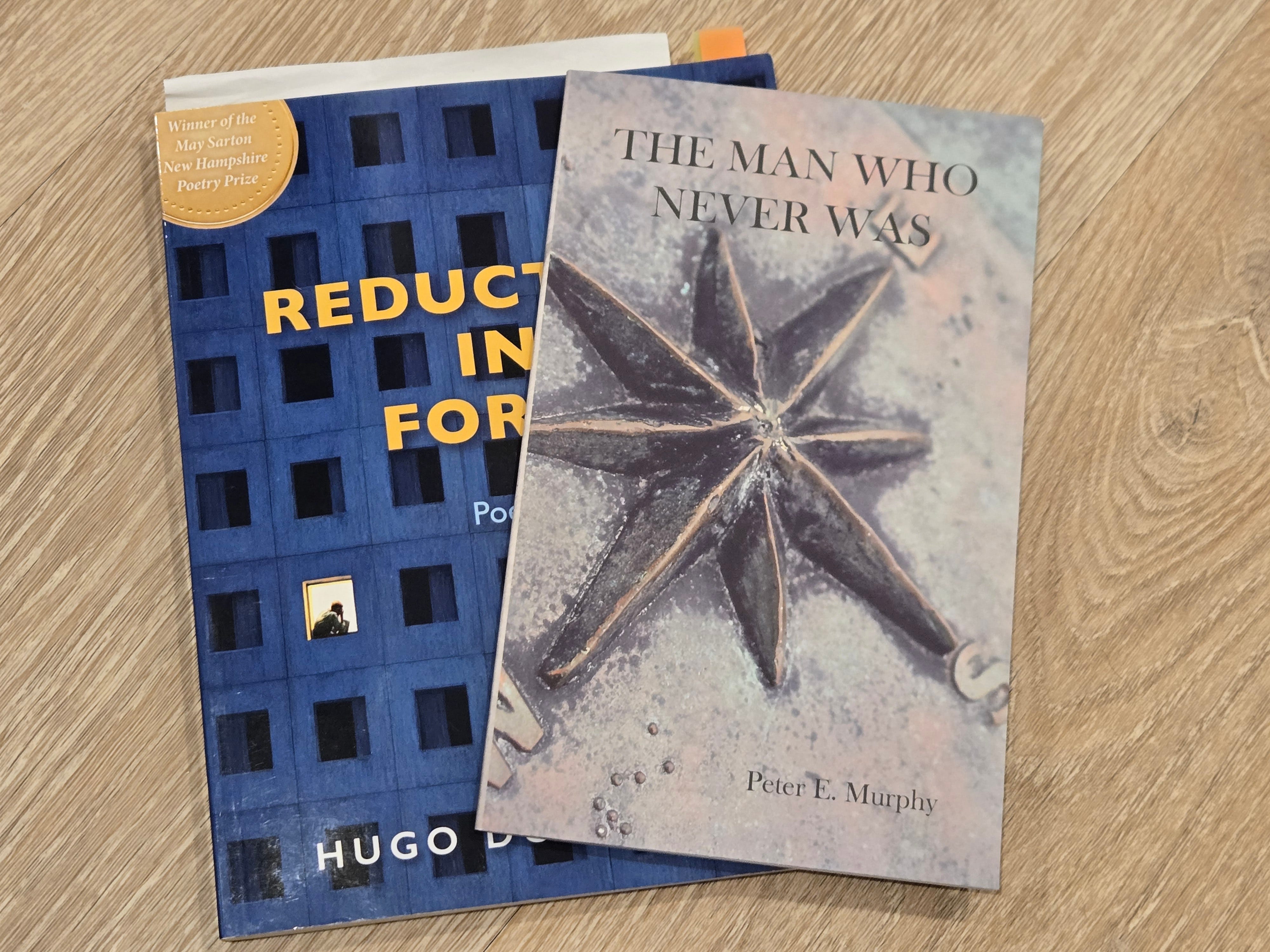
It’s perhaps too obvious to explain how much of myself I read in those lines. I was so lost. In many ways, I was a man who had never been. I was writing RIF, out of work and rather aimless, trying to put one foot in front of the other. I wasn't reading for help, but that's what I was hoping to find. And I knew Peter. Knew him as someone who will always help, who will always lend a hand.
The morning air was already hinting at the season that had not yet arrived but was surely on the way. At 10:13 that morning I wrote to Peter.
I have been reading (and re-reading) your collection “The Man Who Never Was” and was struck by the epigraph in the poem by the same title: I have mapped out a continent / and sent it back to confuse those who might follow. I can’t stop thinking about it but can’t find the source. Where did you find it?
Exactly one hour later, Peter replied.
I’m touched. Thank you for asking.
The Man Who Never Was is full of lies and dissimulations which, in some other perhaps universe, I hope reveal some truths. While all of the other epigraphs are from other sources, that one’s mine. I think I remember laughing when I came up with it.
I see that I attributed it to Mr. Nobody, which is the title of yet another chapbook of poems, where, of course, it does not appear. Mischief upon mischief!
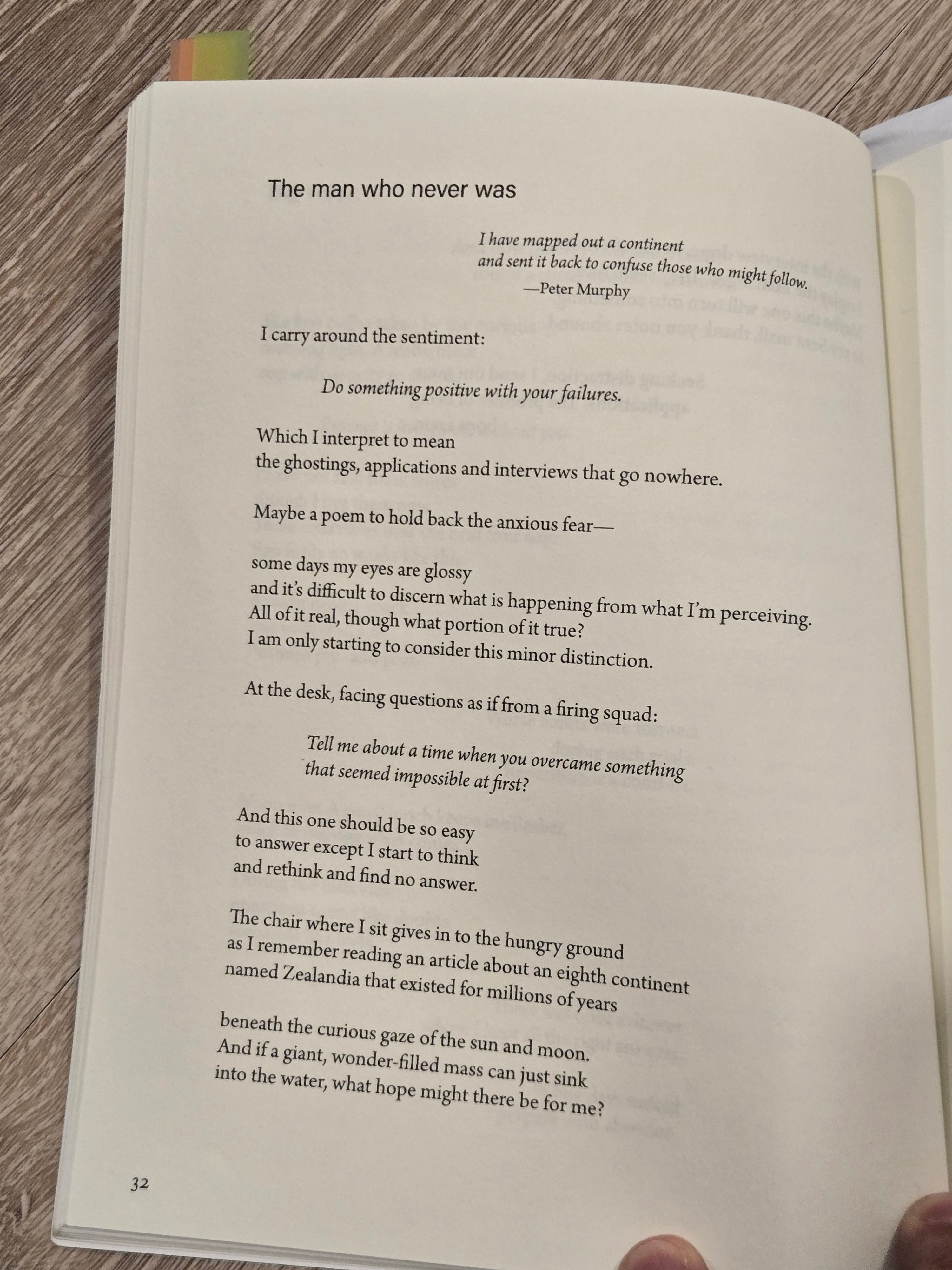
I took all this and put it into a poem. I opened it with the line: “I carry around the sentiment: / Do something positive with your failures.” The rest of the poem wrote itself.
It’s a blessing to have writing as an aid. For me, writing is not therapy. It’s not catharsis. It’s more like a good walking stick. You dictate the direction, the pace and the destination. The writing is the support as you go.
But more important than the writing are the people you meet along the way. It’s a blessing to have friends like Peter. In January of the following year, I was at a writing retreat that Peter has run for over 30 years. I had been looking forward to it for a long time. By that point, I had finished the manuscript, was using the weekend to work on edits and revisions, and I so desperately wanted to tell Peter about how he had inspired one of the poems I was most proud of. On Friday night, following the reception, after I had a few drinks, I almost did it. Then Saturday passed and I didn’t really have an opportunity to talk to him one-on-one. On Sunday, I emailed it to him.
I wrote this poem recently. It’s part of a manuscript I’m working on and was partly inspired by your work. The manuscript is about the corporate world and applying/interviewing for jobs while maintaining space for art. Anyway, I hope you enjoy the poem.
I ran into Peter that evening and he walked straight toward me and gave me a big hug. He told me how much it meant to him to be read that attentively and to have my poem in conversation with his poem. They tell you not to meet your heroes, and in my experience that’s largely true. But if you have a chance to meet Peter, make sure you take it. He’s worth more than all the damn books.
A handful of months later, I had the chance to write to Peter again about this poem and the manuscript. RIF had won an award. It was going to be published. Peter had already been part of the book's story, and I hoped he would agree to be part of it in another way. Of course he said Yes. Here is his blurb:
“Change is the longest word I know,” says the earnest narrator of these poems when his job disappears. He becomes a 21st Century Sisyphus, pushing his LinkedIn-approved CV and AI-enhanced cover letter up countless virtual mountains where instead of rolling backwards, they disappear into the cloud. He presses “Submit! Submit!” pressing on, hoping the universe will offer him a job so once again he can smile at his children. But rather than despair, he discovers “another wing in the house of me.” Dos Santos writes with grace and beauty, reminding himself, and us, “the cure for life is more life.”
It turns out there was a map after all. I couldn’t see it at the time, but it’s so clear to me now. Mischief upon mischief.
Peter E. Murphy is the author of thirteen books and chapbooks of poetry and prose, and the founder of Murphy Writing of Stockton University based in Atlantic City. Learn more about Peter and his work here.
The Murphy Writing 33rd Annual Winter Poetry & Prose Getaway will be held January 15-18, 2027, in Galloway, NJ. I will be leading a workshop there and working on a new project. Learn more at stockton.edu/wintergetaway.
Hugo’s new collection, Reduction in Force, has been described as “revelatory,” “stunning,” “penned with sobering clarity and vulnerability,” and “a fast-moving, visceral portrait of separation, survival, and saudade, and how the three remain inextricably tethered.” It is available wherever books are sold (Amazon | Barnes & Noble | Bookshop) and directly from the publisher here.